Guided journal for
self-awareness in relationships
5 weeks / 2 persons
Starting Point
We began with a simple question: Why do people get divorced? Today, around 50% of marriages end in divorce, often without any visible warning signs beforehand. Our goal was to design a digital product that could help couples build healthier and happier relationships.
process and methods
I worked with another student, Kathryn. At the beginning, we defined clear responsibilities for each phase of the design thinking process. This helped us manage disagreements more efficiently, as the person responsible for each phase made the final decision when needed. At the same time, we collaborated closely throughout the entire process.

Problem definition
Through our research, we identified childbirth as a common tipping point in relationships. The arrival of a new family member often creates an imbalance between partners and represents a major life transition, especially for mothers. Based on this, we defined our target group as new mothers and conducted focused research.
We discovered that relationship challenges vary widely. Some couples struggle when one partner works too much, while others face difficulties when a partner is not working. These issues are often deeply connected to personal background, expectations, and communication patterns.
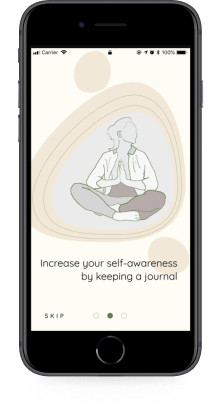
From this, we concluded that self-awareness plays a key role in maintaining healthy relationships. We therefore designed an app aimed at increasing self-awareness within a relationship.
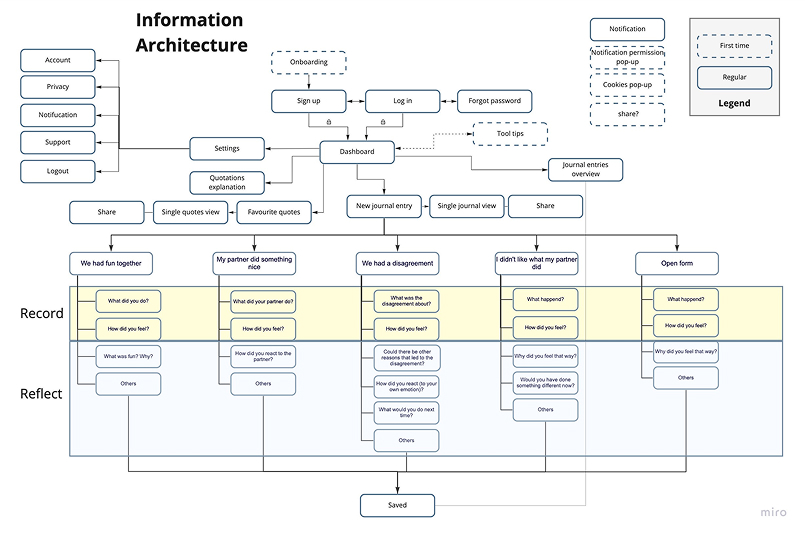
Information Architecture
Wireframe
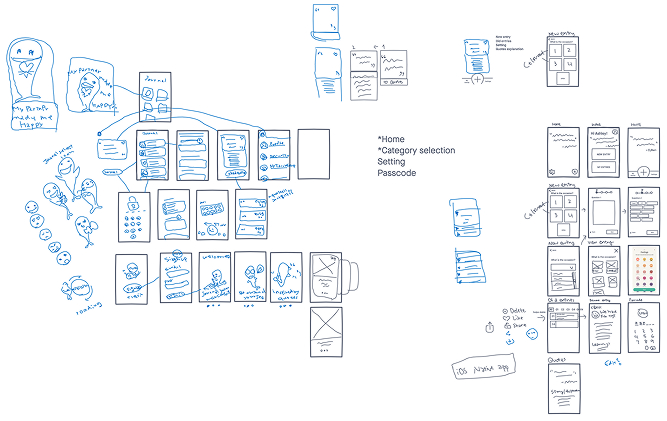
Functions
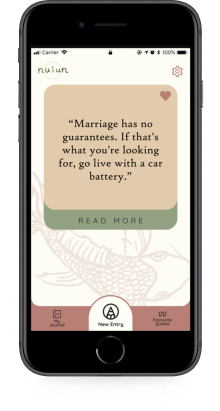
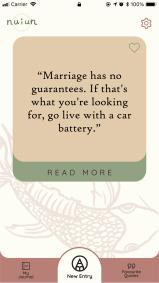
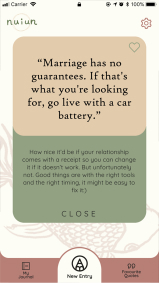
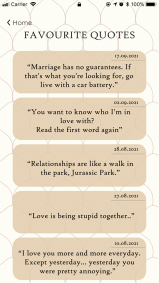
1. Funny daily quotes.
Light, humorous quotes help release stress and reduce tension in everyday life. Users can also share quotes with their partner as a simple way to communicate and reconnect.

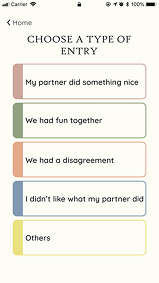
2. Guided journal
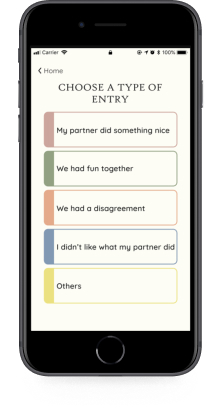
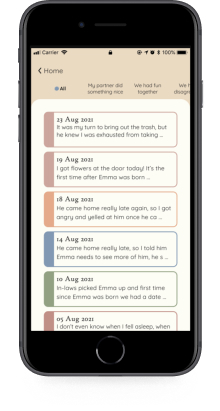
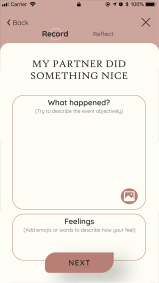
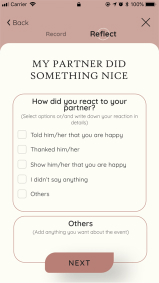
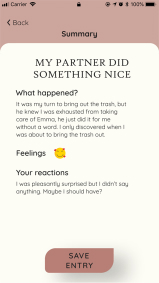
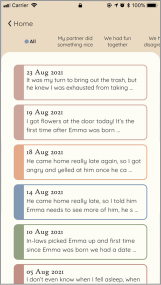
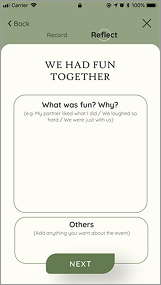
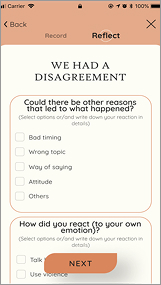
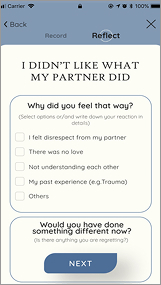
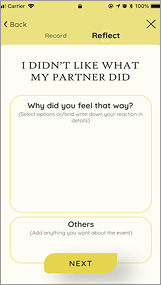
Users select an entry type from different categories and move through two stages: record and reflect.
+The record stage focuses on capturing events and emotions.
+The reflect stage helps users explore the reasons behind their feelings and reactions.
Entries can also be shared, supporting more open and meaningful communication between partners.
Usability test
We tested five key tasks and achieved a 100% success rate across all of them.
Some feedback from participants included:
“It’s exciting. I’ve never seen something like this before.”
“Using my phone often feels stressful, like someone wants something from me. This app doesn’t feel that way, and I really liked it.”
Challenges
+It took time to narrow our focus to self-awareness.
+After our low-fidelity usability test, we realized we wouldn’t personally use the app in its current form. This led us to return to the empathize phase and redesign the concept.
+Evaluating long-term impact is difficult, as relationships are complex and require extended testing to measure meaningful results.
What I learned
This project taught me the importance of not being afraid to go back to the starting point. At one stage, I felt uncertain about our direction but hesitated to speak up because we had already invested so much time. Revisiting the process allowed us to move faster the second time and ultimately create a solution we were confident in.
I also reflected on a note I wrote when I got married: “My husband is not from IKEA.” It reminds me that relationships are not something you can assemble or replace easily. In a society that often treats things as disposable, I wanted to design something that encourages care, reflection, and long-term connection. I hope this app can help people build happier relationships, and in turn, create a more supportive environment for their families.